
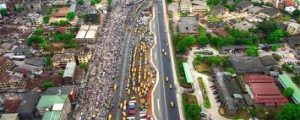
Urban Planning, although with definitional controversies, can be defined as a set of procedures for making choices among alternatives for the determination of future actions (Davidoff and Reiner, 1965). It also involves making choices among the options that appear open for the future (Roberts, 1974). These definitions, among others, reveals that urban planning is a multi-faceted profession that cannot be divorced from the decision making process of any sort. Little wonder, it is a sociopolitical process involving many actors with different interests and inputs (Aluko, 2004).
Urban planning has not only been a tool of technological, economic and political advancements, but a backbone of environmental and public health safety. This was affirmed with the involvement of planners in industrial revolution and utopian movement in England and other areas of the United Kingdom. The urban planners at that time were referred to as the “reformers”, “pioneers” or “seers” among others, which directly describe their involvement in city direction and transformation. These set of people were directly involved in the management of the environmental challenges that poses a threat to public health safety. Planning interventions were also utilized to provide solutions to many societal problems such as environmental degradation; socioeconomic challenges, and political imbroglio. These pioneers were also central in shaping and furthering the relationship between social and health planning (Duhl and Sanchez, 1990).
COVID-19, an infectious respiratory disease caused by “SARS-CoV-2” (Severe Acute Respiratory Syndrome Coronavirus 2), has infected over 3.84 million cases people across 187 countries and territories. On the 28th of February, 2020, an index case of the pandemic was reported in Nigeria, and since then has increased to 4,151 confirmed cases and 128 deaths. Unfortunately, despite various government interventions, the incidence of COVID-19 has continued to ravage major cities in the country. Yet, unlike previous pandemic era in the country, urban planning intervention has not been so explored. This brings to fore a need to put into perspectives the rich history between management of pandemic and involvement of urban planning in the country.
Before the advent of modern democracy in Nigeria, planning interventions has been utilized for the achievement of healthy environment in the country. Notable among them was the 1863 Lagos Town Improvement Ordinance. This ordinance came into being as a result of the annexation of the Lagos as a British colony under the treaty of cession in 1861. This ordinance signaled the commencement of environmental consciousness in the country. The primary objective of the ordinance was to provide an immediate solution to poor sanitation and haphazard development which led to the decay of Lagos City. To implement this, city planners and health practitioners worked simultaneously. The enforcement of the provision of development and sanitation as outlined in the objectives of 1863 ordinance was vested on the health department of the former Lagos city council.
The 1904 cantonment proclamation also saw to the improvement of development, building control and sanitation practices in the country. The 1917 township ordinance, although had little emphasis on public health, was the first attempt at spatial orderliness in the country. The ordinance officially introduced zoning for guiding the construction and control of building and other developments in the urban areas of the country. The part negligence of the township ordinance on public health issues may be connected to the outbreak of bubonic plaque in Lagos which led to the consequent promulgation of the 1928 Lagos Town Planning Ordinance.
The ordinance (i.e. 1928 ordinance) came into effect as a result of the outbreak of the bubonic plaque in Lagos, due to the poor sanitary practice, which pose great threat to public health. The ordinance evoked the formation of a planning agency i.e Lagos Executive Development Board (LEDB). This planning agency was charged with the responsibility of providing solutions to the emerging public health challenge of the city. The agency used various planning instruments such as slum clearance; land use planning, and housing development. Other urban planning related legislations, with respect to public health, in the country, are Mineral Act (1945) which touched on issues like drainage and pollution (air, water and land), and Public Health Laws (1957), to control overcrowding, diseases and general urban squalor. Besides the 1928 ordinance and other legislations which touched on health issues, subsequent ordinance and laws, such as the 1946 town and country planning ordinance and the Nigeria Urban and Regional Planning Decree 88 of 1992, are salient on the public health issues. The indifferent nature of these legislations reflects that urban planning practice and public health have been divorced from each other. This may have led to the outbreak of series of diseases in the country, and the challenges of curtailing such diseases. Yet other methods put in place have failed to effectively aid in its management. For instance, despite an upscale in the health sector, and other mitigation approaches utilized in the management of COVID-19 in the country, there appear to be a daily increase in the incidence of the infection across the country.
From the foregoing, it can be understood that urban planning practice and public health are interwoven, with one being a backbone of another. The past legislation makes reference to the fact that physical and social environments play major roles in the health of communities. The planning profession purports that its focus revolves around the design and creation of sound places for people, planning and public health professionals are intrinsically linked (Duhl and Sanchez, 1990), this is as urban planning serve as a form of primary prevention and contributor to health outcomes.
An effective public health response must take a comprehensive and community based perspectives which focus on the prevention of the pandemic and other related issues. There is therefore a need for collaborative efforts through orientation and training of urban planners and health professional in a bid to increase the foster a synergy between the two professions because, an attempt to derecognize the former in providing solutions to public health challenges would be a serious problem to the latter in combating it ensuing health challenges. Therefore, in the ongoing fight against COVID-19 menace, a strong involvement of urban planners is strongly advocated, especially for the development of preparedness plans for cities to enable them tow the path of resilience.
Article written by Raji A.A and Reviewed by Olanrewaju Samson O. (PhD).
Raji A.A holds a Bachelor of Technology Degree in Urban and Regional Planning from Ladoke Akintola University of Science and Technology, Ogbomoso, Nigeria. Kindly send your feedback on olanrewajusamson9@gmail.com, or whatsapp +2347038540456
9 comments